.png)

Emergency medical services to see boost with added staff, ambulances and equipment
Bastrop County Emergency Services District No. 3 officials told commissioners July 27 the transition to a district-operated emergency medical service remains on schedule for October, with additional ambulances, new equipment and staffing expected to improve response in Elgin and across the county.
Allen Johnson, ESD No. 3 executive director, said the district has spent the past 20 months preparing to take over ambulance operations after being approved in 2024. Initially excluded, Elgin voters later agreed to join the district in November, with residents and those living in the city’s extraterritorial jurisdiction in Bastrop County set to pay a property tax of up to 10 cents per $100 valuation beginning in January.
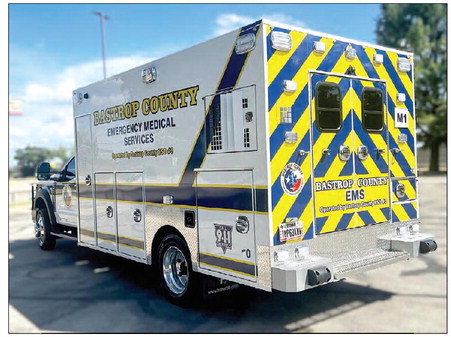
“When we took over, there were four ambulances available in the county on any given day,” Johnson said. “As I stand here talking to you today, there’s eight ambulances available.”
Five ambulances are operating around the clock, according to Johnson, with three additional units available during peak hours. When the district officially launches Oct. 1, the system will expand to 11 ambulances, including eight all-day and two supervisors assisting with countywide coverage.
The district has already begun receiving its new f leet of ambulances equipped with updated medical technology, including heart monitors, ventilators and ultrasound equipment.
Along with expanding coverage, Johnson said the district has nearly completed hiring staff and dispatchers and expects to be fully staffed by the end of August.
“We have a really strong team,” Johnson said. “We recruited a great group of people from around the region to come in.”
Johnson noted determining where dispatchers will operate remains a challenge. He said the district is working with the Bastrop County Sheriff’s Office and the Texas Department of Public Safety to address requirements related to the county’s emergency communications center.
Commissioner Clara Beckett said she hopes the issue can be resolved so dispatchers can work alongside other emergency responders in the same building, an important move to avoid wasting taxpayer dollars.
“It’s a state-of-theart dispatch center and there’s plenty of room right now and in the future … that’s why we invested in it,” she said.
The district is also searching for a solution ahead of the Oct. 1 transition that would allow dispatchers to receive automatic caller location information without delays, according to Johnson.