.png)

Bastrop playwright examines 2011 wildfire
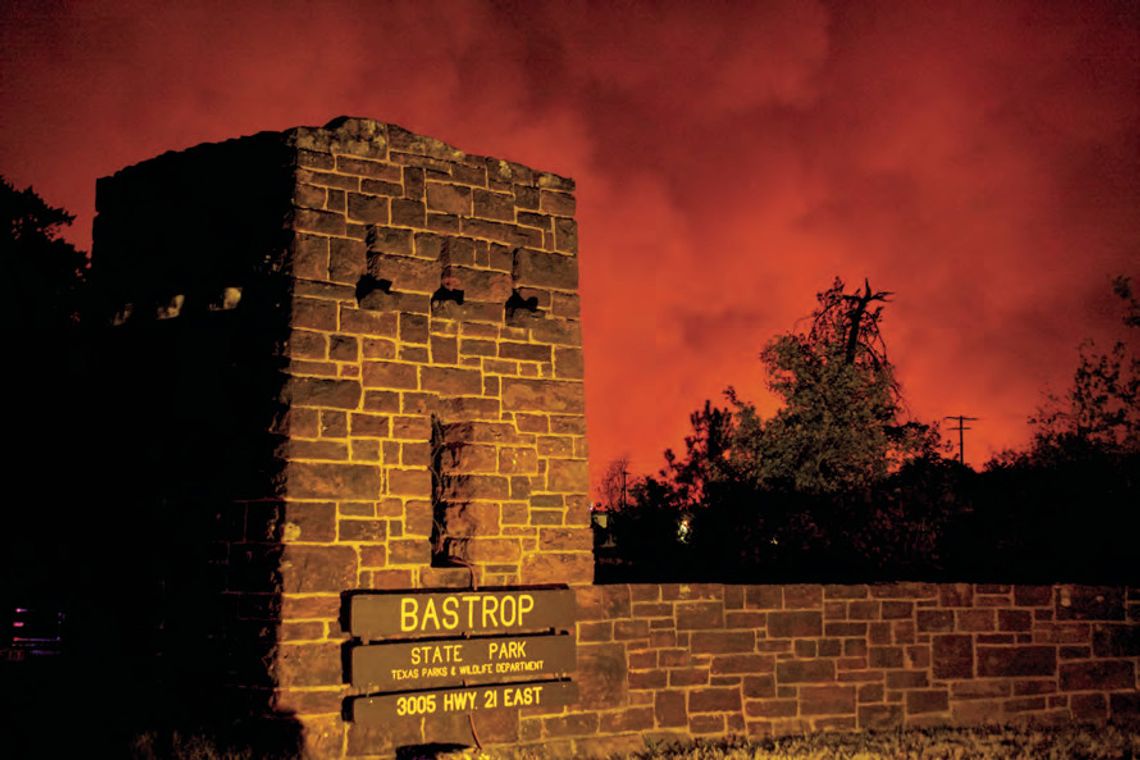
BASTROP — A local college student is bringing the story of the Bastrop County Complex Fire to the stage, using his university thesis to explore how communities remember and rebuild after disaster.
Bastrop native and University of Texas at Austin senior Aaron Sullivan will present a public reading of his play, “The Lost Pines,” nearly 15 years after the 32,000-acre blaze tore through the county. The free reading March 7 at the Bastrop Opera House, 711 Spring St., pulls from an early version of Sullivan’s work and examines the 2011 Complex Fire through archival material, interviews and his own childhood memories.
“Documentary theater is like theater and journalism combined,” Sullivan said. “With my studies in both of them, it seemed like a natural fit.”
The two-act play reconstructs the wildfire from ignition to recovery. Through the script, Sullivan asks if locally produced theater can strengthen a community’s collective memory about disasters, especially as area development and wildfire risk remain prominent.
“Theater is very ephemeral — a big part of this process for me has been thinking about the Bastrop that I know and the Bastrop that I grew up in,” he said. “I think there’s a parallel quality to this, like this fleeting moment of theater is like this fleeting moment of Bastrop as well.”
Sullivan lived in Tahitian Village during the fire, which destroyed over 1,600 homes and killed two people. His house escaped major damage, but he said the experience stayed with him.

“I remember evacuating,” Sullivan said. “I was hysterically crying, and then we rushed into the car and waited in about an hour’s worth of traffic with this big thing of smoke behind us.”
Years later, he returns to the story as both a journalist and artist.
According to Sullivan, the script draws from interviews with firefighters, reporters and evacuees and residents who lost their homes.
“The Lost Pines” also makes use of archival research available at the Bastrop Public Library and University of Texas’ Briscoe Center.
One account comes from an Alaskan firefighter who traveled across the country to battle the blaze. Sullivan said perspectives like that aren’t often revealed, but they show the humanity of Texans in crisis.
“It’s just this really powerful account of his experiences coming from Alaska,” he said. “It does a very good job of illustrating this kind of attitude in Texas that’s really hard to describe … the way that Texans treat each other.”
The reading includes six actors with scripts in hand and minimal staging. After the performance, audience members will join a discussion to help shape the work’s development.
Sullivan said the interactive element is central to the project.
“Theater is a collective experience,” he said, adding he wants the format to encourage empathy in ways a traditional article or film cannot. “We’re coming together to watch it, and then we need to have a conversation about what we just saw.”
The project comes as the county continues to grow, bringing new residents who may not remember the disaster but share the same wildfire risk.
For longtime residents and newcomers alike, Sullivan said he wants people to be good neighbors.
“Bastrop is changing whether you like it or not,” Sullivan said. “Welcome those people and explain what they need to do to not only protect themselves but protect the entire community, because it’s a collective effort.”
Along with a performance in Austin Feb. 27, the Bastrop reading will serve as part of Sullivan’s honors thesis as he completes a double major in journalism and theater and dance.
Sullivan said a full production is something he is thinking about for the future, possibly timed with the disaster’s 15th anniversary in September. Though for now, he wants the community to simply remember and help each other in times of need.